 By Galileo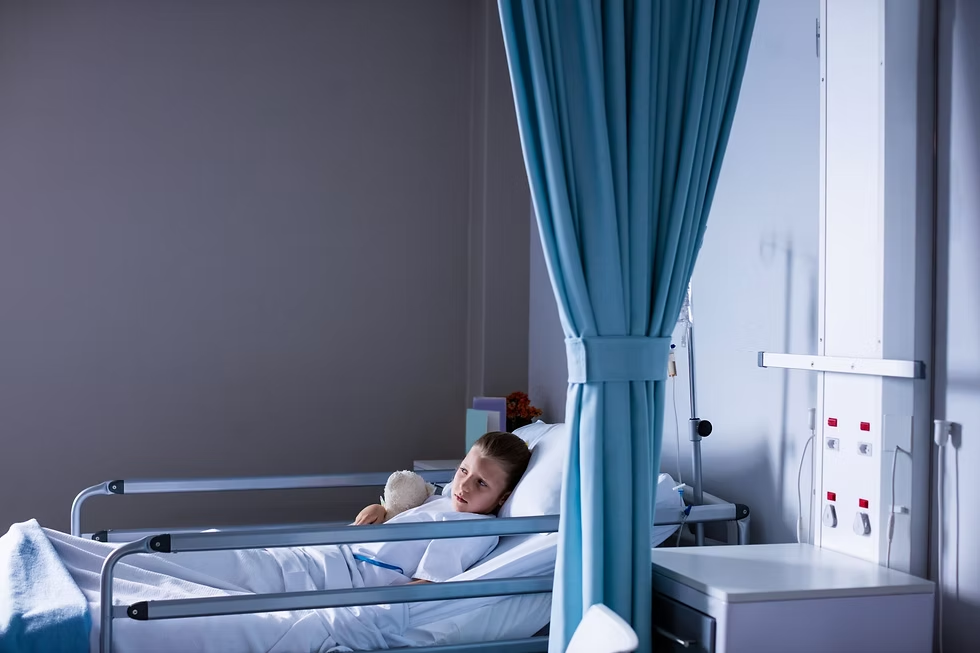
Privacy in the hospital environment is not simply a physical barrier or a cloth wall erected between two beds, but rather a fundamental clinical and human need of the patient. When it comes to pediatric settings, this concept of privacy is intertwined with children’s dignity, family involvement, and emotional safety in a way that is quite different from adult wards.
The use of privacy curtains in pediatric wards is not just a design feature, but an important means of protecting children’s privacy, their family experience, and reducing hospital fear. The purpose of this article is to clarify how privacy principles impact pediatric care, and how facility managers can improve this environmental element through procurement and planning.
Maintaining privacy in children’s medical settings is essential for both physical dignity and psychological safety.
- Physical dignity: Children should have complete privacy during medical examinations, procedures, and personal care
- Psychological safety: Children are often unable to openly discuss their fears or lack of privacy in the unfamiliar environment of a hospital, so it is the responsibility of the hospital’s physical environment to provide this protection
It should be noted that privacy is a supportive factor that helps reduce the child’s stress, not a clinical cure.
As children age and develop, their privacy needs change:
- Infants: The need for privacy at this age is primarily for the dignity and comfort of the child’s parents or caregivers
- Young children: These children consider the interior of the curtain to be a special “safe space” for themselves, which protects them from external disturbances
- Adolescents: Children of this age are very sensitive about their bodies and personal matters (Pediatric Privacy), so they need strict privacy like adults
Purchasing teams must take this entire age variation into account when selecting curtains.
The overall patient experience of any child in the hospital is not determined by one thing, but rather by a combination of many environmental and social factors. Privacy, a comfortable environment, better communication with staff, and the presence of family all of these things combine to make a child’s stay in the hospital easier. Curtains play an important and supportive role in improving this overall patient experience, but they cannot be considered a single or independent solution for the entire system.
The unfamiliar and clinical environment of a hospital can create a sense of helplessness and vulnerability in children. A quiet and private space can significantly help reduce this fear in a child. In healthcare design, this is considered part of the Healing Environment, where environmental elements such as privacy, lighting, sound and visual design work together to reduce unnecessary stress for the patient. It is important to clarify here that privacy curtains are only an auxiliary environmental element; they cannot replace clinical care, sedation or emotional support from child life specialists.
Curtains are a flexible means of making conversations between hospital staff, patients, and families private and dignified:
- Sensitive conversations: When a doctor needs to share a child’s diagnosis or long-term treatment plan with the family, the curtains can be closed to protect the conversation from being exposed to the entire ward
- Routine care: Curtains can be left open during routine care so that nursing staff can keep an eye on the patient and maintain contact
- Family involvement: This flexible boundary makes the family feel included in every conversation about the child’s treatment, rather than isolated from the ward environment
The ability to provide privacy through curtains depends as much on their aesthetic appeal as on their functional design. The following design factors are important when purchasing:
- Full coverage: The width and length of the curtains should be such that they can cover the bed from all sides without any gaps
- Secure locking system: The closing mechanisms of the curtains should be such that they do not open or slide automatically due to wind or light movement
- Visual management: The positioning of the curtains in high-traffic areas should be such that the view inside is completely invisible from the outside
Only after meeting all these technical features do Children’s Privacy Curtains fulfill their original purpose.
Facility managers should make privacy a regular facility protocol in the hospital, rather than leaving it up to the whims of a single individual. This should include regular checks of the position and coverage of drapes during daily hospital rounds, and training staff on when drapes should be placed during specific clinical steps or conversations. When this system becomes a regular routine, a consistent standard of privacy is established throughout the hospital.
Procurement teams should consider these objective points when selecting curtain suppliers:
- Is the length and width of the curtain sufficient to completely cover the various hospital beds without gaps?
- Is the curtain closing mechanism easy to use and reliable for staff, patients, and family members?
- Is the curtain coverage consistent across different rooms and bed configurations?
- Is the curtain hardware durable enough to withstand daily changes and wear and tear?
- Assuming that simply hanging a curtain is enough, without checking that there are no visible gaps when it is closed
- Failing to take into account the specific emotional and privacy sensitivities of adolescents when designing general wards
- Ignoring the family’s need for intimacy and the effectiveness of curtains during sensitive and delicate medical conversations
- Considering privacy as a purely hygienic or decorative matter, rather than as a means of patient dignity and communication
- Failing to provide staff with regular training on how to ensure the correct use of curtains during patient examinations or personal care
The healthcare industry is now moving towards patient-centered design, which is focused on clinical performance as well as the convenience of the patient and his family. Future hospitals are working on flexible room designs where privacy settings can be changed depending on the size of the family and the nature of the medical procedure. The goal of this green and flexible thinking is to make the hospital environment more familiar and comfortable for children.
The following is a practical checklist for facility managers to maintain privacy:
- Do ward curtains cover the entire bed area without any gaps or visible sightlines?
- Are curtain locking mechanisms easy for staff and families to use, and are they durable?
- Does hospital staff routinely practice closing curtains during sensitive conversations and examinations?
- Does the hospital design meet the age-appropriate privacy needs of adolescents?
- Is the correct positioning of curtains being monitored regularly during daily hospital rounds?
Privacy curtains for pediatric patients are a quiet but vital part of the hospital environment, providing a discreet form of privacy, family intimacy, and communication with staff. These curtains are an excellent environmental support element to make the pediatric hospital experience dignified and calm, although they cannot replace clinical treatment or the loving care of staff.
To maintain this balance, on the right track’s privacy curtains provide hospitals with an integrated system that provides complete coverage without gaps, has a durable locking system, and is designed to be child-friendly. Choosing these smart curtains provides facility managers with the best possible support in establishing world-class standards of privacy and family care in their pediatric wards.
Frequently Asked Questions
1. How does patient privacy affect a child’s overall hospital experience?
Privacy is one of several environmental factors that can improve a child’s hospital experience. It helps reduce the child’s fear of the unknown by giving them a sense of safety and dignity.
2. Should privacy practices differ between younger children and adolescents?
Yes, privacy for young children is mostly limited to satisfying their parents and creating a small safe space for themselves, while adolescents need the same strict privacy as adults for their physical dignity and personal conversations.
3. How can hospitals ensure families feel included during private bedside conversations?
The best way to do this is to have the parents stay with them inside the curtain when the doctor closes the curtain during an examination or a sensitive conversation, so that they can remain part of their child’s treatment process, even if they are away from the eyes of the entire ward.
4. What design features matter most for effective pediatric privacy curtains?
The most important features include the full length and width of the curtain (so that there are no gaps), an easy-to-use and durable closing mechanism, and precise management of visual lines in high-traffic areas.
5. Are privacy curtains enough to address a child’s emotional needs during hospitalization?
No, curtains are just a supportive element that provides privacy. The love of the family, the compassionate attitude of the medical staff, and the support of child life specialists are essential to meet the emotional needs of children.