 By Galileo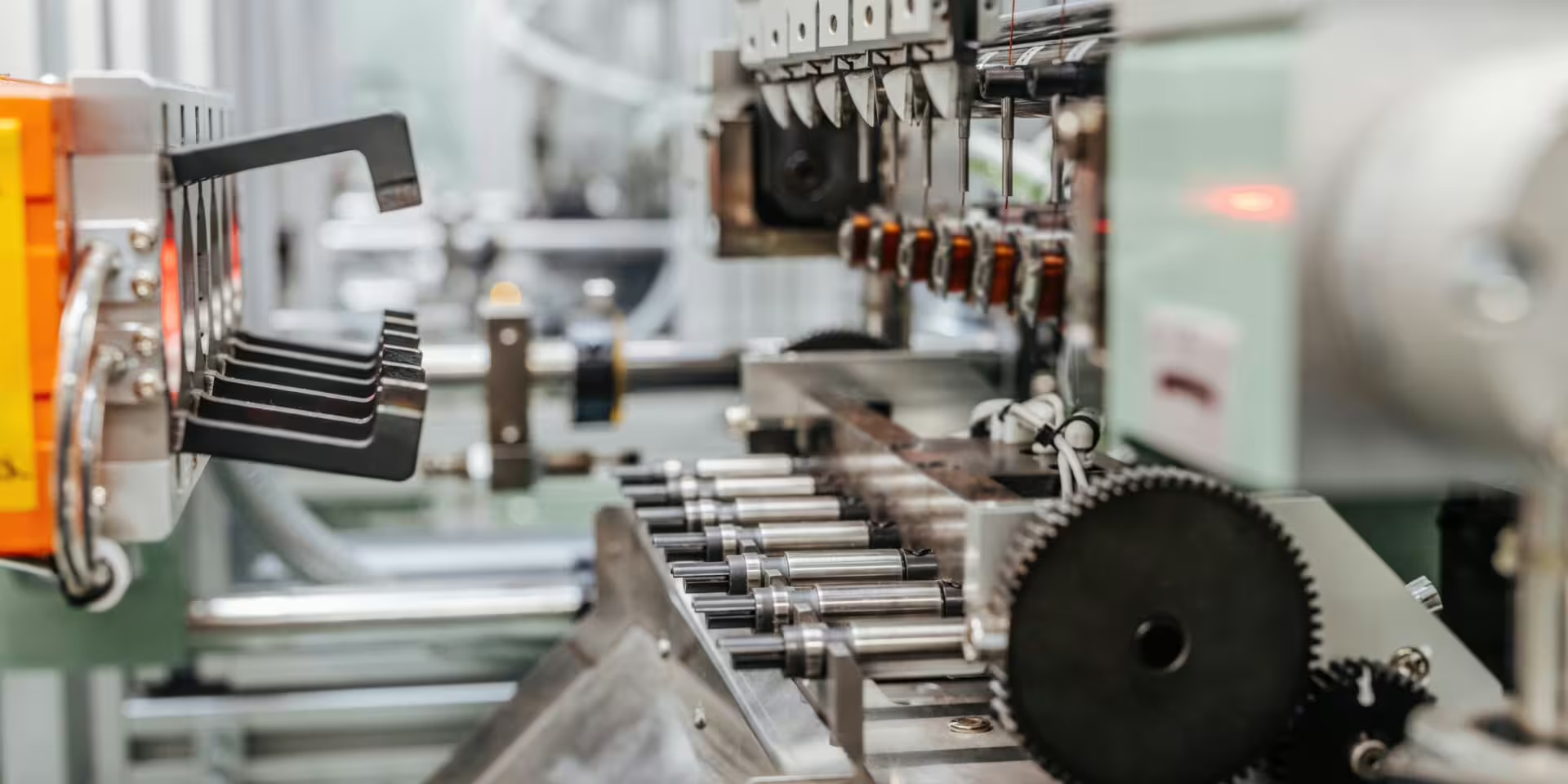
Modern electrical and motor manufacturing depends on precision, speed, and consistent production quality. An automatic coil winding machine helps manufacturers achieve these goals by automating the process of winding copper or other conductive wire around a specified component. From an Inductor winding machine used for electronic components to advanced brushless motor winding systems, automated winding technology supports accurate wire placement, controlled tension, and repeatable production. These machines can reduce manual effort while improving productivity and helping manufacturers maintain consistent product standards.
An automatic coil winding machine is specialized equipment designed to wind wire into predetermined patterns around components such as coils, inductors, transformers, stators, and other electromagnetic parts.
Unlike manual winding, automated equipment uses programmed controls to manage important production parameters. These may include winding speed, wire tension, number of turns, traverse movement, and positioning.
Depending on the application, machines can be designed for different wire diameters, coil sizes, winding patterns, and production volumes. This flexibility makes automatic winding equipment useful across electronics, automotive, electrical, and industrial manufacturing.
The winding process begins by positioning the component or winding fixture correctly. Wire is then fed through a controlled tensioning and guiding system before being wound around the required area.
The machine follows programmed instructions to control the winding pattern and number of turns. Sensors and computerized controls can help monitor the process and maintain consistent operation.
After winding is completed, the machine may perform additional operations such as wire cutting, stripping, termination, or coil forming, depending on its configuration. The finished component can then move to inspection or assembly.
Accuracy is one of the most important advantages of automatic coil winding technology. The position and number of wire turns can directly influence the electrical properties of a component.
Automated systems can repeat programmed winding patterns with minimal variation. This helps manufacturers produce coils with consistent dimensions and electrical characteristics.
Precise wire placement also reduces problems such as overlapping turns, loose winding, excessive tension, and uneven coil formation. Better control can therefore contribute to improved product quality.
Manual winding can be time-consuming, especially when manufacturers need to produce thousands of identical components. Automatic equipment can perform repetitive winding operations much faster and with consistent cycle times.
Higher production speed allows manufacturers to increase output without relying entirely on additional manual labor. It can also help businesses meet production schedules and respond to larger orders.
The actual speed depends on the machine design, component type, wire diameter, winding pattern, and other production requirements.
Wire tension plays an important role in achieving high-quality coils. Excessive tension can stretch or damage the wire, while insufficient tension can result in loose or irregular winding.
Automatic winding machines use tension-control mechanisms to maintain more stable wire movement throughout the winding process.
Consistent tension helps produce uniform coils and reduces variation between individual components. This is particularly important for high-volume manufacturing, where even small inconsistencies can affect overall product quality.
Automated winding equipment can help manufacturers use wire more efficiently. Accurate control of winding parameters reduces errors that can cause unnecessary wire consumption or rejected components.
Material waste can also be reduced when machines consistently produce the required number of turns and maintain the correct winding pattern.
Better material utilization can lower production costs and improve manufacturing efficiency. This is especially valuable when using expensive copper wire or specialized conductive materials.
Automatic coil winding machines are used in a wide range of industries. Electronics manufacturers use winding equipment to produce inductors, transformers, and other electromagnetic components.
The automotive sector uses automated winding technology for various motor and electrical components. Industrial manufacturers also use winding machines for generators, pumps, compressors, actuators, and other equipment.
Consumer electronics, household appliances, medical devices, renewable energy systems, and automation equipment can also require precisely manufactured coils.
The machine configuration depends on the specific application and the required electrical and mechanical characteristics of the finished component.
Inductors require carefully controlled winding because the number, arrangement, and spacing of wire turns affect their electrical performance.
An automated winding system can control wire placement and winding parameters to produce consistent inductive components. Manufacturers can program the equipment according to the required coil specifications.
Automation is particularly useful for large-scale production because it helps maintain consistency across thousands of components while reducing repetitive manual operations.
Brushless motors require precisely manufactured windings to generate the electromagnetic fields needed for motor operation. Automated winding technology can help manufacturers produce consistent coils and stator windings.
The winding process may involve complex patterns and specific wire-placement requirements. Computer-controlled equipment can repeat these patterns accurately and support high-volume manufacturing.
Improved winding consistency can contribute to more predictable motor performance and simplify quality-control procedures.
Automatic winding machines can improve quality control by standardizing important production parameters. When every winding cycle follows the same programmed instructions, manufacturers can reduce process variation.
Modern systems may also incorporate sensors that detect problems such as wire breaks, abnormal tension, or incorrect positioning. Identifying issues during production can reduce the number of defective components reaching later manufacturing stages.
Manufacturers can combine automated winding with electrical testing and visual inspection for more comprehensive quality assurance.
Automatic winding technology can become part of a larger smart manufacturing system. Machines can be integrated with material handling equipment, assembly systems, inspection stations, and production-management software.
Data collection can provide information about production speed, machine performance, defects, and operating conditions. Manufacturers can use this information to identify bottlenecks and improve production processes.
Automation also makes it easier to establish standardized workflows across multiple production lines or facilities.
Regular maintenance is essential for keeping automatic winding equipment operating reliably. Operators should inspect wire guides, tension systems, fixtures, sensors, and moving components according to recommended maintenance schedules.
Cleaning is also important because dust and debris can affect machine movement and winding accuracy. Any unusual noise, vibration, or changes in winding quality should be investigated promptly.
Preventive maintenance can reduce unexpected downtime and help extend equipment service life.
Manufacturers should evaluate several factors before selecting an automatic coil winding machine. These include wire diameter, component dimensions, winding pattern, required production speed, automation level, and desired accuracy.
The machine should also match current and future production requirements. Flexible equipment may be beneficial for manufacturers producing multiple component types.
Other considerations include control-system capabilities, operator training, technical support, spare-parts availability, maintenance requirements, and overall machine reliability.
The combination of speed, accuracy, repeatability, and automation makes automatic winding equipment valuable for brushless motor winding manufacturing. By reducing repetitive manual processes, manufacturers can improve workflow efficiency while maintaining consistent production standards.
Automated systems can also make production more predictable. Standardized winding parameters help reduce variation, while integrated inspection can identify problems earlier.
These advantages can contribute to lower waste, improved productivity, and better control over large-scale manufacturing operations.
The future of coil winding is closely connected to smart automation, robotics, machine vision, and real-time production monitoring. Manufacturers are increasingly seeking equipment that can operate efficiently while providing detailed information about production performance.
Advanced control systems may allow machines to automatically adjust certain parameters according to production conditions. Improved sensors and inspection technologies can further enhance quality and reduce manufacturing defects.
As demand for electric motors, electronic components, and energy-efficient equipment continues to grow, automatic winding solutions are expected to remain an important part of modern manufacturing.
An automatic coil winding machine provides manufacturers with a practical way to improve winding precision, production speed, material efficiency, and consistency. Technologies such as the Inductor winding machine and brushless motor winding equipment demonstrate how specialized automation can support different electrical and motor manufacturing requirements. With accurate wire placement, controlled tension, repeatable processes, and improved quality monitoring, automated winding can create a more efficient production environment.
As manufacturing continues to move toward greater automation, reliable coil winding technology will play an increasingly important role. Selecting suitable equipment and combining it with proper maintenance and quality control can help manufacturers achieve stable production and meet demanding industry requirements.
 Spero Agency