 By Charlotte
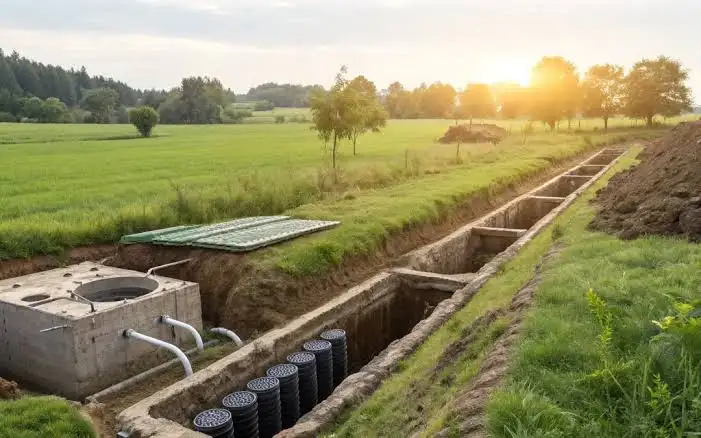
A failing drain field feels like a disaster with only one ending: dig up the yard and spend five figures on a replacement. In many cases that ending is avoidable. Restoration methods — soil fracturing, bacterial treatments, hydrojetting, and simply resting the field — can reopen clogged soil and buy a system five to fifteen more years, often for a fraction of replacement cost. The key is matching the method to the actual cause of failure, because a fix aimed at the wrong problem wastes money and leaves the field still failing.
The direct answer is that restoration works in roughly seven to eight out of ten cases where biomat buildup or compaction is the main problem, and it works best when it is started early, before pipes are crushed or the soil is permanently saturated. This guide explains how to read the warning signs, what each restoration method does, what it costs, and when replacement is genuinely the only honest option.
A septic drain field, also called a leach field, is a network of perforated pipes buried in trenches of gravel and soil. Treated wastewater flows out of the septic tank into those pipes, seeps through the gravel, and is cleaned by soil microbes as it percolates downward. Most fields last 25 to 30 years with regular pumping, but they fail when the soil can no longer absorb water fast enough. When that happens, wastewater backs up toward the house or surfaces in the yard.
Replacement typically runs from about $5,000 to $30,000 depending on size, soil, and local rules, and it tears up the yard for weeks. Restoration, by contrast, generally costs somewhere between $500 and $6,000 depending on the method. That gap is why a proper diagnosis matters: spending a few hundred dollars to find out whether the field is restorable can save thousands if it is — and avoids spending thousands on a restoration that never had a chance if it is not.
The most common cause of drain field failure is biomat, a dense, slimy layer of anaerobic bacteria and organic matter that forms where wastewater meets soil. A thin biomat is normal and even useful — it helps filter pathogens. The problem starts when solids, fats, and oils escape the septic tank and feed the biomat until it thickens into a nearly waterproof skin across the soil-pipe interface. Water that used to percolate freely now ponds above the layer, and the field slowly drowns.
Fields rarely fail overnight. The early signs are easy to dismiss: toilets that flush slowly, drains that gurgle, a patch of lawn over the field that stays suspiciously green and lush while the rest dries out, or a faint sewage smell after heavy rain. Standing water or wet spots over the trenches, sewage odours near the tank, and backups during laundry day are later signs — by then the field is already in trouble.
A professional diagnosis usually starts with pumping the tank and inspecting the distribution box, then checking the trenches with a probe or camera. Soil percolation testing tells the contractor whether the ground can still absorb water at all. If the pipes are intact, the soil still percolates, and the problem is biomat or compaction, restoration is on the table. If pipes are crushed, the water table is too high, or the soil has failed a perc test completely, replacement is the honest answer.
- Slow drains and gurgling toilets, especially after laundry day.
- A strip of lawn over the field that stays lush and green while the rest dries out.
- Standing water, wet spots, or a sewage smell near the trenches.
- Backups that return even after the tank has been pumped.
Soil fracturing, often sold under the Terralift name, is a mechanical method for compacted fields. A contractor drives a pneumatic probe four to six feet into the ground alongside the leach lines and injects compressed air in short, powerful bursts. The bursts fracture the compacted soil and the biomat layer, creating a network of small fissures that reopen pathways for wastewater to flow. No excavation is needed, and a typical job takes a day.
Industry estimates put success at roughly 70 to 80 percent when compaction or biomat is the primary issue, according to the National Onsite Wastewater Recycling Association. The limitation is structural: fracturing cannot repair a crushed pipe, remove a root mat, or fix a field built in soil that never drained well in the first place. It works best paired with a biological treatment afterward, so the newly opened pores are colonised by aerobic bacteria rather than re-sealed by anaerobic slime.
Biological restoration works with the field’s own biology instead of against it. A shock treatment pours a high concentration of aerobic bacteria and enzymes into the system, usually through a toilet or an inspection port, so the microbes reach the biomat and digest the organic waste, grease, and sludge that are sealing the soil. Aerobic bacteria break the material down far more aggressively than the anaerobic bacteria that built the biomat, converting it into water and carbon dioxide.
| Method | Typical cost | Time to results | Best when |
| Enzyme and bacteria shock | $150-$300 | 2-4 weeks | Biomat is the main cause |
| Hydrojetting laterals | $800-$2,000 | 1-2 weeks | Pipes are clogged with sludge |
| Soil fracturing (Terralift) | $1,500-$5,000 | 2-6 weeks | Soil is compacted or sealed |
| Field resting | Minimal | Several months | An alternate area can take the load |
| Full replacement | $5,000-$30,000 | Weeks of work | Pipes crushed or soil failed |
Start with the cheapest method that matches the diagnosis. Many homeowners begin with an enzyme treatment plus reduced water use, then move to jetting or fracturing only if flow does not recover. Stacking methods in the wrong order — for example, fracturing a field whose pipes are full of roots — spends money without fixing anything.
Hydrojetting sends a specialised hose with a high-pressure nozzle through the distribution lines, blasting away accumulated biomat, grease, debris, and even small root intrusions from inside the pipes. It cleans the plumbing without excavation, and it is often the right first step when a camera inspection shows the laterals themselves are clogged rather than the surrounding soil. A contractor can jet the lines and then follow with a bacterial treatment to keep the reopened surfaces clean.
Jetting works on the pipes, not the soil. If the soil around the trenches is sealed by biomat, clean pipes still drain into a waterproof layer, so jetting alone will not restore absorption. That is why a camera inspection matters before choosing: it shows whether the blockage is inside the pipe, in the soil, or both, and the treatment plan follows from what the camera actually finds.
Resting means diverting wastewater away from the clogged portion of the field — to an alternate disposal area, if the system has one — and letting the soil dry out for weeks or months. As the soil dries, aerobic bacteria colonise the biomat and oxidise it, gradually restoring permeability. It is the slowest restoration method and it requires somewhere else for the wastewater to go, which many older systems do not have, but where it is possible it costs almost nothing and it works with the soil’s natural recovery.
Resting is often combined with pumping the tank first, so no new solids reach the field while it dries. Homeowners sometimes rest one half of a field while the other half carries the load, alternating over a season. The discipline is in the water use: laundry spread across the week, shorter showers, and no running the dishwasher and washing machine at the same time while the field recovers.
Hydrogen peroxide treatments flush diluted peroxide — typically a 25 to 35 percent solution — through the field to oxidise and dissolve biomat. Used carefully by a professional, peroxide can reopen soil pores quickly. The danger is that strong chemicals, acids, and caustic drain cleaners kill the very bacteria the system depends on. A chemical that dissolves the biomat but sterilises the soil leaves a field that drains for a month and then fails worse than before.
| Treatment | Effect on biomat | Effect on soil biology | Verdict |
| Enzyme and bacteria shock | Digests it gradually | Supports it | Safe first step |
| Hydrogen peroxide (pro use) | Oxidises it fast | Disruptive if overdosed | Professional only |
| Acid or caustic cleaners | Dissolves it harshly | Kills beneficial bacteria | Avoid |
| Bleach down the drain | Little effect | Kills bacteria | Avoid entirely |
The rule is simple: anything that works with biology is a candidate, and anything that sterilises the system is not. Never pour paint, solvents, or large amounts of bleach into a septic system, and be sceptical of any additive that promises an instant fix in a bottle. The biology takes weeks; a product that claims hours is usually selling a chemical shortcut.
Know where the DIY line sits. A homeowner can reduce water use, add a bacterial treatment, keep vehicles off the field, and pump the tank on schedule. Jetting, fracturing, and peroxide treatments belong to licensed professionals with the right equipment. A rented jetter in untrained hands can flood a field or damage a distribution box, turning a restorable system into a replacement job.
Restoration buys years only if the habits that caused the failure change. Pump the tank every three to five years so solids never reach the field. Spread laundry across the week instead of running five loads on Saturday. Fix leaking taps and running toilets, because a field sized for a household’s normal flow cannot absorb a constant leak. Keep cars, construction equipment, and heavy planters off the field, and plant only shallow-rooted grass over the trenches.
Watch what goes down the drain. Grease belongs in the bin, not the sink. Garbage disposals add solids the tank was not designed for, and antibacterial soaps in large quantities suppress the bacteria the field needs. A restored field is not a new field — it is a second chance, and the daily routine decides how long that chance lasts.
Most methods run from about $500 to $6,000 depending on the approach: enzyme treatments are the cheapest, hydrojetting sits in the middle, and soil fracturing with bacterial injection is the most expensive. Full replacement typically costs $5,000 to $30,000, so restoration is usually a fraction of the price.
With proper maintenance, a restored field typically lasts another 5 to 15 years. The exact span depends on the method used, the soil, and whether water use and pumping habits improve after the work.
You can do the easy parts: bacterial treatments, water conservation, and keeping traffic off the field. Jetting, soil fracturing, and chemical treatments need licensed professionals and, in most areas, a permit.
Spring is generally best. The soil is accessible, problems are visible after winter, and the warmer months give bacteria time to work before the ground cools again.
No. Roots that have physically punctured or crushed laterals cannot be fixed by bacteria, jetting, or fracturing. Those sections need excavation and partial replacement, though the rest of the field may still be restorable.
A professional diagnosis — tank pumping, distribution box inspection, camera check, and a soil percolation test — tells you. If the pipes are intact and the soil still percolates, restoration is worth trying first.
Drain field restoration is a genuine alternative to replacement when the diagnosis is honest and the method matches the cause. Biomat yields to bacteria, compaction yields to fracturing, and clogged laterals yield to jetting — but none of them repairs crushed pipe or failed soil. Spend the money on a real diagnosis first, start with the least invasive method that fits, and change the habits that caused the failure. Done that way, restoration is not a gamble; it is five to fifteen more years from a system you already own.
 Galileo