 By Engrnewswire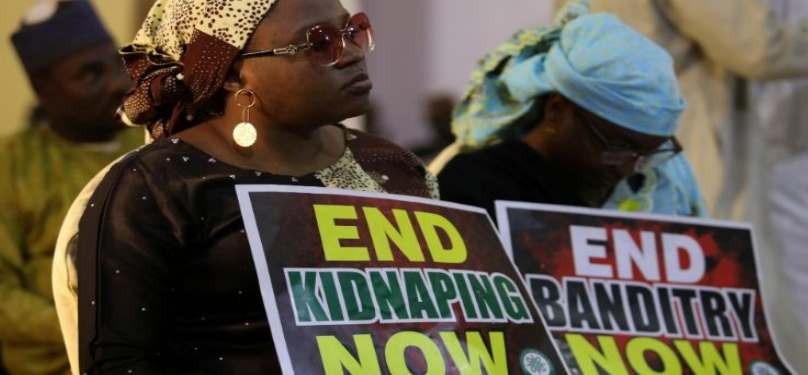
MINNA, Nigeria As dusk settles over a settlement of displaced families on the outskirts of Minna, children’s laughter mixes with the distant hum of generators. Under a makeshift shelter, 32-year-old Mary Audu recounts the day armed men entered her village. “They didn’t ask who prayed where,” she says. “They just took what they wanted and left.”
Audu is Christian. Her neighbor in the camp, a grain trader named Idris, is Muslim. They were attacked by the same bandits, on the same morning, for the same reason: because criminals knew their communities lacked protection.
But thousands of miles away, in Washington and parts of the American Midwest, political discourse about Nigeria sounds dramatically different. Commentators talk of a Christian population under targeted extermination. Some lawmakers cite Nigeria as the epicenter of a global religious war.
The narratives in America appeal to a familiar script victims, villains, moral clarity. Nigeria, however, refuses to play by those rules.
Reports across Plateau, Niger, Kaduna, and Borno reveal a patchwork of violence driven by divergent forces: ransom-based criminality, insurgent taxation systems, climate-driven migration pressures, and vigilante reprisals. The victims encompass Christians, Muslims, and traditionalists. The perpetrators vary just as widely.
Foreign narratives often ignore the fact that Nigeria’s government funds both Muslim and Christian pilgrimage institutions, and that interfaith marriages remain common across the country. They rarely mention that extremist groups have killed more Muslim villagers than Christian ones. Nor do they capture Nigeria’s dizzying social interdependence: shops shared by different communities; festivals celebrated across boundaries; extended families formed from multiple identities.
The danger of the American narrative is not merely its inaccuracy it is its impact. Advocacy campaigns have pushed for sanctions, suspended cooperation, and framed Nigeria as a nation defined primarily by sectarian division. Diplomats warn that such moves risk undermining multinational security operations and emboldening extremist propagandists who thrive on binary worldviews.
“Americans see us through their own debates,” said a senior Nigerian diplomat. “But our conflict is not their culture war. It is a security and governance crisis we are trying to solve.”
As night deepens in Minna, Mary Audu watches her children settle on a thin mat. “We just want peace,” she says. “People abroad should tell the truth about what is happening here not the story they already believe.”
 Galileo