 By Galileo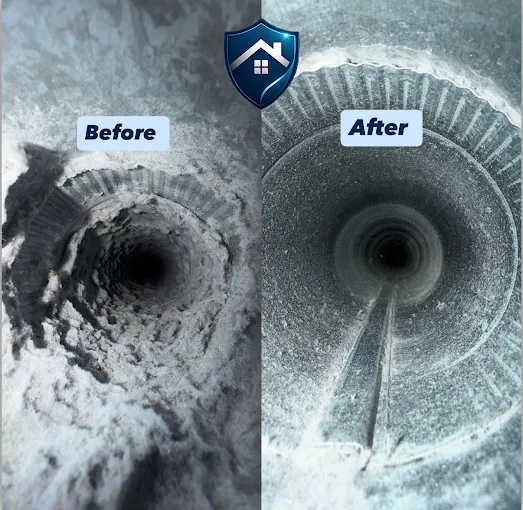
If you’ve cleaned your living room and found a fresh layer of dust two days later, you’re not imagining it, and you’re probably not cleaning wrong either. In a lot of Raleigh homes, the real source isn’t the surfaces you’re wiping down, it’s the air ducts pushing debris back into the room every time the heat or AC kicks on.
Raleigh’s climate works against clean ductwork in two specific ways. Summers run long and humid, and when warm, moisture-heavy air meets the cooler metal inside an AC duct, condensation forms. If that moisture doesn’t dry out quickly, it pools in the lower sections of the ductwork and creates exactly the kind of damp, dark environment mold and mildew need to take hold.
Spring pollen is the other half of the problem. Pine and oak pollen coat everything outside for weeks at a time, and a surprising amount of it rides in on clothes, shoes, and pets. Once it’s past the return vents, it settles into the ductwork right alongside everyday dust and pet dander, and every heating or cooling cycle stirs it back into the air you’re breathing.
Beyond weather-driven stuff, everyday life adds to the pile: pet dander, skin cells, lint from clothing and upholstery, grease from cooking, and VOCs off-gassing from paint or new furniture. None of this is unusual. It’s what happens in any home over time. The issue is that a standard filter only catches so much before the rest ends up lining the inside of the ducts.
A few things tend to show up together when a duct system needs attention:
- Dust reappears on furniture within a day or two of cleaning
- Utility bills climb without a clear reason like a heat wave
- A musty smell shows up specifically when the system turns on
- Some rooms feel noticeably stuffier or warmer than others
- Allergy symptoms flare up more indoors than outdoors
One of these on its own isn’t a big deal. A few of them together is worth paying attention to.
A shop vacuum isn’t going to cut it here, it doesn’t reach far enough into the system or generate the suction needed to actually clear it out. A proper cleaning starts by sealing off every supply and return vent in the house, then connecting a heavy-duty vacuum to the main trunk line near the air handler. That setup puts the whole system under negative pressure, so air only moves one direction: out of the ducts and into the vacuum, never back into the house.
From there, technicians work through the ductwork with rotary brushes and compressed air to knock loose whatever’s stuck to the walls, while the vacuum pulls it straight out. When homeowners bring in professionals based in Raleigh for this kind of job, that’s the level of equipment and process they should expect, not a quick pass with consumer tools.
Dryer vents get ignored way more than they should, considering lint buildup restricts airflow the same way duct debris does, plus it’s a legitimate fire hazard on top. If your dryer’s been taking longer than usual to finish a load, that’s often the first clue. Since a lot of the access points overlap with duct work, it’s common for homeowners to have a dedicated dryer vent crew handle both in the same appointment.
Heating and cooling make up a big chunk of a typical home’s energy use, so a system fighting through clogged ducts burns more electricity than it should. The blower motor works harder, the compressor runs longer, and both wear out faster than they would otherwise. Cleaning the ducts alone isn’t the whole fix either; the blower motor, evaporator coil, and drain pan need attention too, or dirt left behind just recontaminates the ducts the next time the system runs.
A basic fiberglass filter is built to protect the equipment, not necessarily to improve air quality. Switching to a pleated filter with a higher MERV rating catches finer particles like pollen and mold spores, but it also needs changing more often since it restricts airflow faster as it fills up. Pairing that with a proper cleaning covers both sides of the problem.
None of this is a one-time fix. Raleigh’s pollen and humidity aren’t seasonal visitors, they’re a fact of living here, which means the buildup keeps happening in the background even when nothing seems obviously wrong. Catching it before the signs pile up saves money on the utility bill and keeps the air inside your home closer to what you’d actually want to breathe.
Prestige Protected offers indoor air quality services to homeowners across Raleigh, NC, covering air duct cleaning, dryer vent cleaning, and full HVAC system care. The goal is straightforward: clear out what’s restricting airflow and help the system run the way it’s supposed to.
 Charlotte